
Why Tree Problems Show Up in March After a Mild or Icy Winter
March often feels like a fresh start in North Georgia. Warmer afternoons, longer days, and early signs of spring make homeowners eager to get outside and assess their property. But for many homeowners in Cumming, GA and surrounding North Georgia areas, March is also when hidden tree problems begin to surface.
After a mild winter or an icy one, trees may look fine at first glance. Then suddenly, limbs fail, bark splits, trees lean, or entire sections decline. At LS Trees, March is one of our busiest months for inspections, removals, and emergency calls because winter damage often reveals itself right as spring arrives.
Understanding why these problems show up now can help you protect your home, your family, and your property before spring storms roll in.
Why Winter Damage Is Often Delayed
Trees are resilient, but winter weather creates stress that is not always visible immediately. During colder months, trees slow their growth and conserve energy. Damage caused by freezing temperatures, ice accumulation, or fluctuating conditions often stays hidden until the tree begins to wake up in early spring.
In March, trees shift from dormancy into active growth. Sap starts moving, buds form, and the internal systems of the tree go back to work. This is when underlying issues become apparent.
Mild Winters Can Be Just as Stressful as Harsh Ones
Many homeowners assume mild winters are easier on trees. In reality, inconsistent temperatures can be more damaging than steady cold.
When winter temperatures fluctuate between warm and freezing, trees may break dormancy too early. This can cause:
Premature budding that later freezes
Stress fractures in bark
Weakening of internal wood structure
Increased vulnerability to disease
In North Georgia, where winter temperatures often rise and fall rapidly, these conditions are common. Trees that appear healthy in January or February may struggle once spring growth begins.
Ice Storms Create Hidden Structural Damage
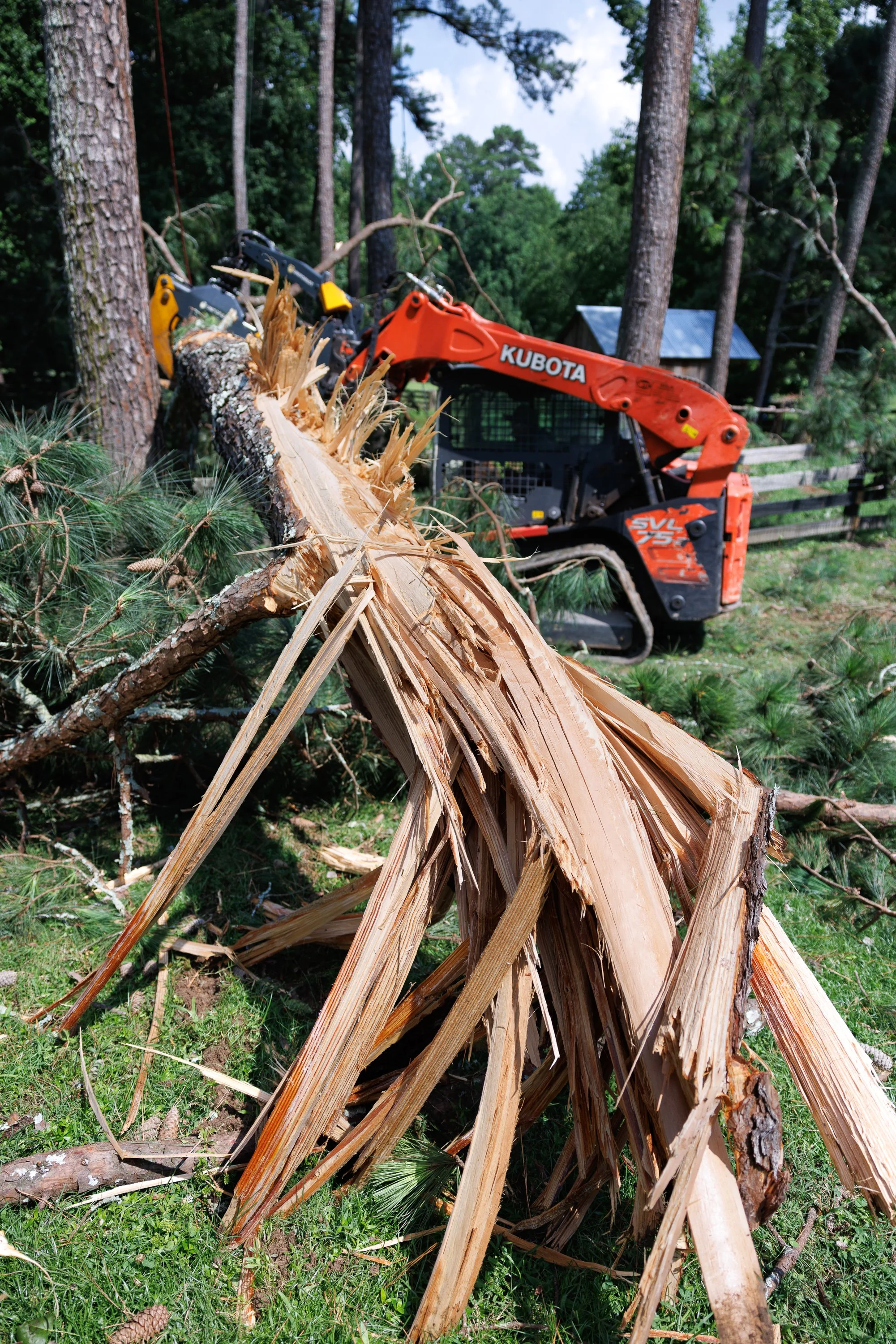
Ice storms are especially problematic for trees. Even a thin layer of ice adds significant weight to limbs and branches.
Common ice-related damage includes:
Hairline cracks in limbs
Splitting at branch unions
Weakened attachment points
Root stress from frozen, compacted soil
Often, these issues do not cause immediate failure. Instead, the tree survives the winter but cannot handle the added stress of spring winds and rain. March storms are frequently when weakened limbs finally give way.
Freeze and Thaw Cycles Affect Roots
Tree problems do not always start above ground. Winter freeze and thaw cycles can shift soil, destabilize root systems, and reduce anchoring strength.
Signs of root damage that appear in March include:
Leaning trees
Cracked or heaving soil near the base
Mushrooms or fungal growth
Sudden canopy thinning
Roots are responsible for water and nutrient uptake. When roots are compromised, the entire tree becomes less stable and more vulnerable to failure.
Internal Decay Becomes Noticeable in Spring
Decay often develops slowly and invisibly inside a tree. Winter stress accelerates this process, especially in older trees or species common in North Georgia such as pine, oak, and maple.
By March, homeowners may notice:
Soft or hollow areas in the trunk
Bark peeling or separating
Dead limbs that did not drop earlier
Reduced leaf development on one side of the tree
What looks like a spring issue is often the result of winter damage that weakened the tree from the inside out.
Why March Is a High-Risk Month for Tree Failures
March combines several risk factors at once:
Trees exiting dormancy
Increased rainfall
Stronger winds
Early spring storms
This combination puts pressure on already stressed trees. Many of the emergency tree removals we perform in Cumming, Dawsonville, and surrounding areas happen in March because trees simply cannot handle the transition.
Common Tree Problems Homeowners Notice in March
Homeowners often call LS Trees in March for issues such as:
Large limbs hanging lower than before
Trees leaning toward homes or driveways
Pine trees dropping excessive needles
Oaks with delayed or uneven leaf growth
Fallen branches after light winds
These are warning signs that should not be ignored.
How Early Action Prevents Bigger Problems
March is one of the best months to address tree issues before spring storms become more severe.
Proactive tree care can help:
Reduce emergency removal costs
Prevent damage to roofs, fences, and vehicles
Improve tree health before the growing season
Protect family members and guests from falling limbs
Waiting until a tree fails often results in higher costs and more damage.
What a Professional Tree Inspection Looks For
At LS Trees, our March inspections focus on identifying winter-related damage and preparing trees for spring.
We evaluate:
Limb strength and attachment points
Signs of internal decay
Root stability and soil conditions
Canopy balance and weight distribution
Proximity to structures and power lines
These assessments help determine whether trimming, removal, or monitoring is the best course of action.
March Tree Trimming Sets the Stage for Healthy Growth
Selective trimming in March removes dead or weakened limbs before spring storms arrive. It also helps redirect energy toward healthy growth.
Benefits include:
Reduced wind resistance
Improved structural balance
Lower risk of limb failure
Cleaner, safer outdoor spaces
Proper trimming now helps trees grow stronger throughout the rest of the year.
When Tree Removal Becomes the Safest Option
Not every tree can be saved. Trees with extensive internal decay, compromised roots, or severe lean may pose too much risk.
Removing hazardous trees in March allows homeowners to:
Avoid emergency removals during storms
Protect nearby structures
Plan future landscaping safely
Restore peace of mind before storm season
Our team handles removals with precision and care, even in tight spaces or near water, slopes, and structures.
Do Not Forget About Stumps and Debris
Winter storms often leave behind broken limbs, fallen trees, and old stumps that become safety hazards in spring.
March is an ideal time for:
Stump grinding
Debris cleanup
Clearing damaged or overgrown areas
Preparing yards for spring landscaping
Removing these obstacles improves safety and curb appeal while preventing pest issues.
Bonus: Free Wood Chips for North Georgia Homeowners
As part of our services, LS Trees offers free wood chips when available. March is a great time to use wood chips for:
Moisture retention as temperatures rise
Weed suppression before spring growth
Soil health improvement
Erosion control on slopes
Wood chips are an eco-friendly way to recycle tree material while benefiting your yard.
A Cumming, GA Example
A homeowner in Cumming contacted LS Trees in early March after noticing their pine tree leaning slightly toward the house. The tree had survived winter without visible issues.
Our inspection revealed root instability caused by freeze and thaw cycles and internal decay at the base. Two weeks later, a strong storm moved through the area. Because the tree had already been removed, the home avoided what would have been significant damage.
Why Choose LS Trees
Homeowners across Cumming and North Georgia trust LS Trees because we offer:
Over 15 years of hands-on experience
No subcontractors
Licensed and insured service
Precision equipment for difficult access
Honest recommendations based on safety and tree health
We treat every property like it is our own.
Protect Your Property Before Spring Storms Arrive
March is not too early to think about storm preparedness. It is the perfect time.
If your trees experienced a mild or icy winter, now is when problems are most likely to appear. A professional inspection can help you stay ahead of costly damage and keep your property safe.
📞 Call or text LS Trees at (770) 616-6079
📍 Proudly serving Cumming, GA and North Georgia
🌳 Ask about tree inspections, trimming, removal, stump grinding, and free wood chips
Your trees survived winter. Make sure they are ready for spring.