
How to Tell If a Tree Is Dangerous: Warning Signs North Georgia Homeowners Should Never Ignore
If you're searching for tree service in Cumming, GA because you're worried about a tree on your property, you're not alone.
One of the most common questions homeowners ask is: "How do I know if a tree is dangerous?"
The challenge is that many hazardous trees don't look dangerous at first glance. A tree can appear healthy from the outside while hiding serious structural problems inside. By the time visible damage appears, the tree may already pose a risk to your home, vehicles, family, or neighboring property.
At LS Trees, we regularly help homeowners throughout Cumming, Alpharetta, Milton, Dawsonville, Gainesville, and surrounding North Georgia communities identify trees that may be at risk of failure before costly damage occurs.
Whether you're concerned about storm damage, a leaning tree, dead branches, or signs of disease, knowing what to look for can help protect your property and provide peace of mind.
Why Dangerous Trees Are Common in North Georgia
North Georgia's climate creates ideal growing conditions for trees, but it also creates challenges.
Local trees face:
Strong summer thunderstorms
Heavy rainfall
High winds
Occasional ice storms
Saturated clay soils
Drought conditions during hot summers
These weather patterns can weaken even healthy trees over time.
This is especially true for:
Pine trees
Bradford Pear trees
Aging hardwoods
Storm-damaged trees
Trees growing near structures
That's why routine tree inspections and professional tree assessments are one of the smartest investments homeowners can make.
7 Warning Signs a Tree May Be Dangerous 🌲
1. The Tree Is Suddenly Leaning
Not all leaning trees are dangerous.
Some trees naturally grow at an angle.
However, if a tree suddenly begins leaning or appears to be shifting after a storm, this may indicate:
Root failure
Soil instability
Structural damage
Internal decay
A newly leaning tree should always be inspected by a professional tree service company.
2. Large Dead Branches in the Canopy
Dead limbs are one of the most common causes of property damage.
Branches can fall without warning during:
Wind events
Thunderstorms
Heavy rain
Even calm weather
Large dead branches hanging over your:
Home
Driveway
Fence
Outdoor living space
should be removed as soon as possible.
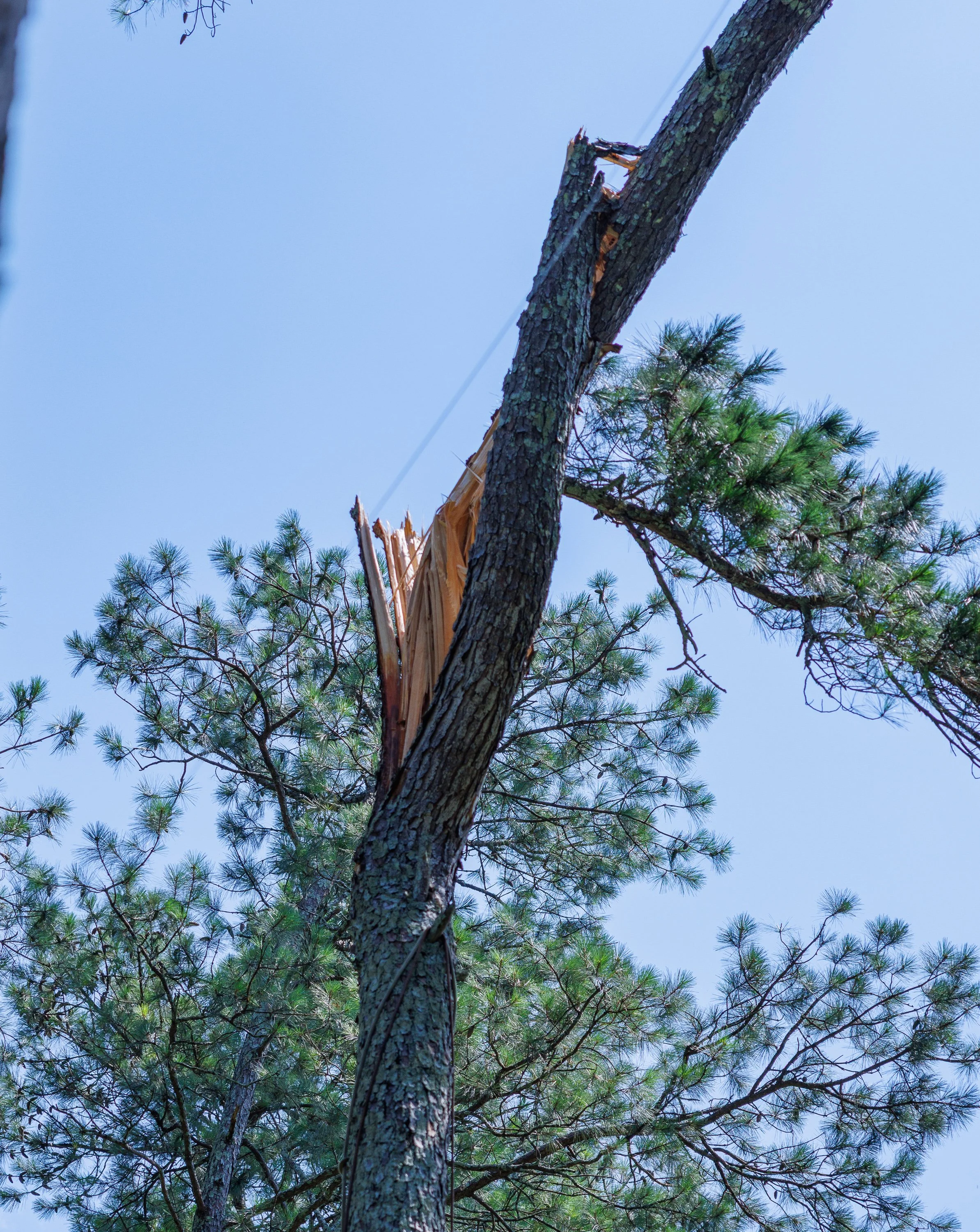
3. Cracks or Splits in the Trunk
A crack in the trunk is more than a cosmetic issue.
Large splits often indicate structural weakness that may worsen over time.
Common causes include:
Lightning strikes
Wind damage
Storm stress
Internal decay
Trees with significant trunk damage should be professionally evaluated.
4. Fungal Growth Around the Base
Mushrooms growing near the trunk may look harmless, but they can be one of the strongest indicators of internal decay.
Fungal growth often suggests:
Root rot
Internal deterioration
Structural instability
Many homeowners are surprised to learn that a tree can appear healthy while slowly rotting from the inside out.
5. Exposed or Damaged Roots
Healthy roots are essential for stability.
Warning signs include:
Exposed roots
Uplifted soil
Cracked ground
Roots pulling out of the earth
Root damage is often a sign that a tree's support system has been compromised.
6. Sections of the Tree Are Dying
If one side of the canopy has significantly fewer leaves than the other, it may indicate:
Disease
Root damage
Internal trunk issues
Nutrient flow problems
Dead sections of a tree should never be ignored.
7. Storm Damage
North Georgia storms can weaken trees in ways that are not immediately visible.
After severe weather, watch for:
Broken limbs
Hanging branches
Fresh cracks
Leaning
Exposed roots
If you're unsure whether storm damage is serious, schedule a professional assessment.
A Real Tree Removal Story from Milton, Georgia
Earlier this year, our crew received a call from a homeowner in Milton, Georgia after a severe thunderstorm moved through the area.
A large pine tree had been struck by lightning and developed a major crack down the center of the trunk. The impact left the tree leaning toward a barn housing several animals.
With each gust of wind, the tree became increasingly unstable.
After evaluating the situation, our team safely secured the area and removed the damaged tree before it could strike the structure. Had the homeowner waited another storm cycle, the outcome could have been much different.
This is exactly why we encourage homeowners to address potential hazards early.
Tree Trimming vs Tree Removal: What's the Difference?
Not every dangerous-looking tree needs to be removed.
Sometimes professional tree trimming can significantly reduce risk.
Tree trimming may be appropriate when:
Limbs are overextended
Deadwood is present
Branches are growing over structures
Tree removal may be necessary when:
The tree is dead
Root systems are failing
Structural damage is severe
Internal decay is extensive
The tree poses a safety threat
A professional tree assessment helps determine the safest option.
Why Homeowners Shouldn't Wait
Many homeowners delay calling until a tree becomes an emergency. Unfortunately, trees rarely fail at convenient times.
Hazardous trees can damage:
Roofs
Vehicles
Fences
Docks
Power lines
Outdoor living areas
The cost of a preventative assessment is often far less than the cost of repairing storm damage.
Frequently Asked Questions
How do I know if a tree needs to be removed?
Signs include severe leaning, extensive decay, root failure, large trunk cracks, or significant storm damage.
Can a dangerous tree be saved?
Sometimes. Depending on the issue, trimming or pruning may restore stability. A professional assessment is the best way to determine the proper course of action.
Do you offer emergency tree services?
Yes. LS Trees provides emergency tree removal and storm cleanup services throughout North Georgia.
Do you provide free tree assessments?
Yes. We offer free estimates and tree assessments for homeowners throughout Cumming, Milton, Alpharetta, Dawsonville, Gainesville, and surrounding areas.
Professional Tree Service in Cumming, GA
LS Trees proudly provides:
Tree Removal
Tree Trimming
Tree Pruning
Emergency Tree Service
Storm Cleanup
Stump Grinding
Tree Health Assessments
throughout:
Cumming
Alpharetta
Milton
Dawsonville
Gainesville
Canton
Lake Lanier communities
North Georgia
Schedule Your Free Tree Assessment Today
If you're concerned about a tree on your property, don't wait for the next storm to make the decision for you.
Our experienced team can identify potential hazards, explain your options, and help protect your home and family.
📞 (770) 616-6079
💸 Mention this blog for $100 OFF your next tree service
Because when it comes to dangerous trees, peace of mind starts with knowing what you're dealing with.