
What Trees Are Most Likely to Fall During Hurricane Season in North Georgia?
A Storm Does Not Have to Make Landfall in Georgia to Damage Your Trees
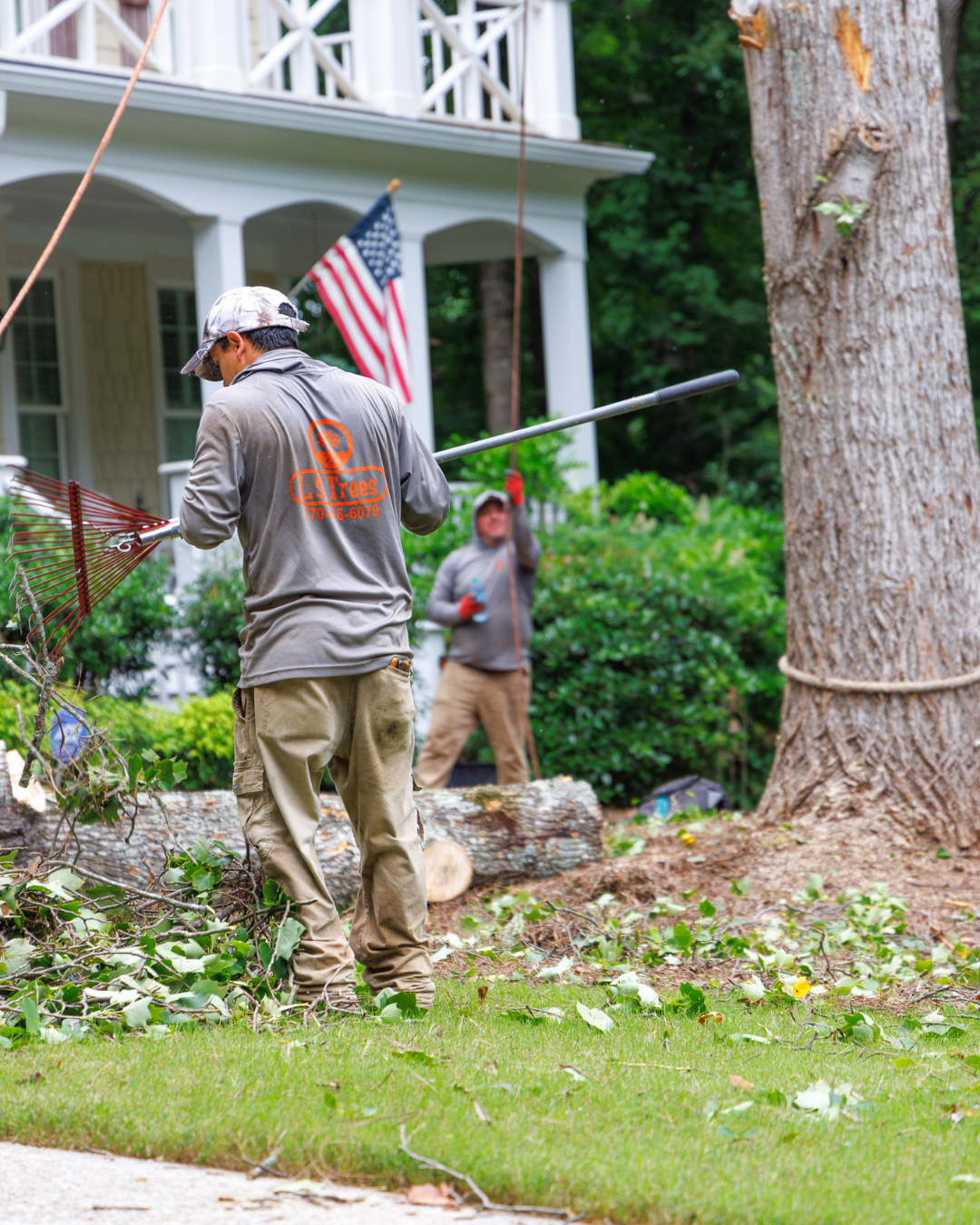
North Georgia may be hundreds of miles from the coast, but that does not mean local homeowners are protected from hurricane-season tree damage.
Tropical systems moving inland can bring heavy rain, powerful wind gusts, saturated soil, lightning, and sudden tornadoes to communities throughout Cumming, Dawsonville, Alpharetta, Milton, Gainesville, Lake Lanier, and surrounding areas.
Those conditions can turn an already weakened tree into a serious threat to your home, vehicles, fences, driveway, barn, dock, or neighboring property.
If you are searching for tree service in Cumming, GA, emergency tree removal near me, or information about which trees are most likely to fall during a storm, this guide will help you understand what to look for before severe weather arrives.
At LS Trees, we help North Georgia homeowners identify hazardous trees, reduce storm risks, and determine whether tree trimming, pruning, or removal is the safest next step.
Key Takeaways
Pine trees are especially vulnerable when tall trunks and shallow or compromised roots are combined with saturated soil.
Bradford Pear trees frequently split because of their weak branch structure.
Dead, leaning, diseased, and storm-damaged trees can fail regardless of species.
Heavy rain can loosen the soil around a tree’s root system before strong winds arrive.
Lightning damage may weaken a tree internally even when it remains standing.
A professional tree assessment can identify risks that are difficult to see from the ground.
Preventive tree trimming or removal is often less stressful than emergency storm cleanup.
Why Hurricanes and Tropical Storms Still Affect North Georgia
Homeowners often associate hurricane preparation with coastal communities. However, tropical systems can continue producing dangerous conditions long after moving inland.
In North Georgia, the greatest tree-related concerns frequently come from a combination of:
Extended rainfall
Saturated red clay soil
Strong wind gusts
Rapidly changing wind direction
Lightning
Flash flooding
Soil erosion
Previous storm damage
A tree does not have to be directly struck by the strongest part of a storm to fail.
Several days of rain may weaken the soil around the roots. A later wind gust can then uproot a tree that appeared stable before the storm began. Trees growing on slopes, lakefront lots, recently disturbed soil, and poorly drained properties may face additional stress.
This is one reason September is an important month for a professional tree assessment in Cumming and North Georgia.
Which Trees Are Most Likely to Fall During Hurricane Season?
No tree species is guaranteed to fall, and a healthy tree may withstand conditions that cause a compromised tree nearby to fail. However, certain species and structural characteristics deserve closer attention.
1. Tall Pine Trees
Pine trees are among the most common trees across North Georgia, and they are also frequently involved in storm-related calls.
Their height can expose them to significant wind forces. If their roots are shallow, damaged, restricted, or growing in saturated soil, they may become more likely to uproot.
Warning signs to watch for include:
A pine that has started leaning
Soil lifting or cracking around the base
Exposed or damaged roots
A thinning or browning canopy
Missing bark
Beetle holes or visible pest activity
A trunk that moves noticeably near the ground
Previous lightning or wind damage
A healthy pine does not automatically need to be removed. However, a tall pine near a house, barn, driveway, power line, or dock should be inspected if it shows changes in its trunk, canopy, or root area.
2. Bradford Pear Trees
Bradford Pear trees are recognizable for their white spring blooms, but their structure can create long-term problems.
Many develop multiple heavy branches from a narrow point in the trunk. As the tree matures, those branch attachments may be unable to support the growing weight. Wind, rain, and ice can then cause the tree to split through the center.
Common warning signs include:
Multiple trunks meeting at one narrow point
Cracks where major limbs connect
Previous branch failures
Uneven weight on one side
Large limbs extending over a home or driveway
Professional pruning may help manage a younger tree’s structure, but a mature Bradford Pear with severe cracking or repeated failures may require removal.
3. Silver Maples and Other Fast-Growing Trees
Fast growth can produce shade quickly, but it may also create weaker wood and more frequent limb breakage.
Silver Maples can develop:
Brittle branches
Large included unions
Cracks between competing trunks
Heavy limbs extending over structures
Aggressive surface roots
These trees may benefit from routine trimming to remove deadwood and reduce overextended limbs. Waiting until a major limb breaks can make the situation more dangerous and expensive.
4. Sweetgum Trees
Sweetgum trees are common throughout Georgia and can grow into large, attractive shade trees. However, mature trees may become problematic when they develop heavy limbs, root conflicts, or decay.
Homeowners often focus on the spiky seed balls, but storm safety depends more on the condition of the trunk, roots, and canopy.
Look for:
Large dead branches
Cavities or hollow areas
Mushrooms near the base
Roots lifting hardscapes
Limbs extending over roofs or outdoor living areas
5. Aging Oaks and Other Mature Hardwoods
Healthy oak trees can be valuable property features and should not be removed simply because they are large or old.
However, mature hardwoods can develop hidden weaknesses over time, including:
Internal decay
Hollow sections
Root rot
Large dead limbs
Cracks between major trunks
Previous storm wounds
A mature tree may continue producing leaves even when part of its internal structure is compromised. That is why canopy appearance alone is not enough to determine whether a tree is storm-ready.
6. Dead or Dying Trees of Any Species
A dead tree does not need hurricane-force winds to fall.
Once a tree dies, the wood and root system begin losing strength. Limbs may break during mild wind, rain, or even calm conditions.
A dead tree near a home, driveway, neighboring property, utility line, playground, patio, or parking area should be assessed promptly.
Warning signs may include:
No leaves during the growing season
Widespread bark loss
Brittle branches
Extensive insect activity
Fungal growth
Hollow sounds or cavities
A completely dead canopy
Pine Trees vs. Hardwoods: Which Are More Dangerous?
There is no single answer because tree condition, soil, location, and storm exposure matter as much as species.
Tall pines may be more likely to uproot when their root support is compromised by saturated soil. Mature hardwoods may be more likely to lose large, heavy limbs or split at weakened branch unions.
Homeowners should avoid assuming that:
Every pine is dangerous
Every hardwood is stable
A tree with leaves is healthy
A tree that survived the last storm will survive the next one
The safest approach is to evaluate each tree individually.
Why Saturated Soil Increases Tree-Failure Risk
Roots need stable soil to anchor a tree.
When repeated rain saturates the ground, the soil may become softer and less able to hold the root system firmly in place. Strong wind can then push against the canopy and trunk while the roots struggle to maintain their grip.
This risk may be greater on:
Sloped properties
Lake Lanier shorelines
Areas with poor drainage
Recently graded lots
Construction zones
Eroded soil
Properties with compacted root areas
After heavy rain, inspect the ground around larger trees. New cracks, lifting soil, exposed roots, or sudden leaning can indicate movement below the surface.
Can Lightning Kill a Tree?
Yes, but the effects are not always immediate.
A lightning strike may cause visible bark loss, a split trunk, burned areas, or sudden canopy decline. It may also create internal damage that is difficult to see from the ground.
Signs of possible lightning damage include:
A long vertical crack
Bark blown away from the trunk
Fresh wood exposed after a storm
Broken upper branches
Sudden browning
A new lean
Decline that develops weeks or months later
A tree struck by lightning does not automatically need to be removed. Its condition should be assessed based on the severity of the trunk, root, and canopy damage.
What Should Homeowners Inspect Before and After a Storm?
Walk your property from a safe distance and look for changes rather than focusing only on whether a tree is standing.
Pay attention to:
The Trunk
Look for cracks, cavities, soft wood, missing bark, old storm wounds, and splitting between major trunks.
The Canopy
Watch for dead branches, hanging limbs, sudden thinning, broken tops, and branches extending over structures.
The Roots and Soil
Check for exposed roots, lifted soil, erosion, mushrooms, cracks in the ground, or movement near the base.
The Tree’s Position
A sudden lean is more concerning than a tree that has grown at an angle for many years.
Nearby Targets
Consider what would be affected if the tree or a major branch failed:
Your roof
Vehicles
Driveways
Fences
Utility lines
Barns
Docks
Pools
Play areas
Neighboring property
Do not stand beneath damaged limbs or approach trees touching power lines. Keep people and pets away from the area and contact the appropriate utility provider when electrical lines are involved.
Can a Storm-Damaged Tree Be Saved?
Sometimes.
Not every damaged tree needs to be removed. Professional trimming or corrective pruning may help when:
Only a limited number of branches are damaged
The main trunk remains stable
The roots have not shifted
Most of the canopy is healthy
The tree is not leaning toward a structure
There is no extensive internal decay
Tree removal may be the safer choice when:
The trunk is severely split
Roots are lifting or failing
The tree developed a significant new lean
A large portion of the canopy is destroyed
Decay has weakened the main structure
The tree is dead
The remaining tree threatens a home or other occupied area
The decision should be based on the entire tree, not one isolated symptom.
Tree Trimming vs. Tree Removal Before Hurricane Season
Tree trimming may help reduce risk by removing dead, damaged, or overextended limbs. Proper pruning can also improve clearance around roofs, driveways, and outdoor spaces.
However, trimming cannot correct every structural problem.
Removing branches from a severely decayed, unstable, or root-damaged tree may not eliminate the underlying hazard. In those cases, complete removal may be necessary.
LS Trees evaluates the condition of the tree, its location, nearby structures, and potential consequences before making a recommendation. The goal is not to remove every concerning tree. The goal is to choose the safest, most practical solution for the property.
What to Do After a Tree Falls During a Storm
If a tree falls on or near your property:
Keep people and pets away from the area.
Do not approach downed power lines.
Photograph the damage from a safe location.
Contact emergency services or the utility provider when immediate hazards are present.
Notify your insurance company if a covered structure is damaged.
Contact a licensed and insured tree service for safe removal and cleanup.
Storm-damaged trees can remain under extreme tension. Limbs and trunks may shift unexpectedly during cutting, making do-it-yourself removal especially dangerous.
Insurance Tips for Tree and Storm Damage
Insurance coverage varies by policy, cause of loss, and the property that was damaged.
After storm damage:
Take wide and close-up photographs before cleanup when it is safe to do so.
Document damage to the home, fence, vehicle, barn, dock, or other structure.
Save invoices, estimates, and relevant communication.
Contact your insurance provider promptly.
Ask what documentation is required before work begins.
Avoid making assumptions about what the policy will cover.
LS Trees can provide ground-level and aerial photography when appropriate to help document tree and property damage. Final coverage decisions are made by the homeowner’s insurance company.
Emergency Tree Service in Cumming, GA and North Georgia
Storm damage does not always happen during normal business hours.
LS Trees provides tree removal, tree trimming, storm cleanup, stump grinding, tree assessments, and emergency tree services for homeowners and property owners throughout North Georgia.
Our service area includes:
Cumming
Dawsonville
Alpharetta
Milton
Gainesville
Canton
Roswell
Johns Creek
Sugar Hill
Lake Lanier communities
Surrounding North Georgia areas
North Georgia properties can include steep terrain, dense tree coverage, narrow access points, mature pines, older hardwoods, barns, waterfront structures, and homes built close to large trees. With more than 15 years of experience, LS Trees understands how local terrain, weather, and property layouts affect tree removal and storm preparation.
If you are searching for tree service in Cumming, GA, storm-damaged tree removal near me, or emergency tree service in North Georgia, our team can assess the situation and explain your available options.
Frequently Asked Questions About Hurricane-Season Tree Risks
What trees are most likely to fall during storms in Cumming, GA?
Tall pines with compromised roots, Bradford Pears with weak branch unions, dead trees, decayed hardwoods, and trees with previous storm damage may face a higher risk of failure. The condition and location of the individual tree matter more than species alone.
How can I tell if a pine tree is dangerous?
Warning signs include sudden leaning, lifted soil, damaged roots, thinning needles, bark loss, trunk cracks, insect activity, and movement at the base. A large pine near a home should be professionally assessed when any of these changes appear.
Should I trim my trees before hurricane season in North Georgia?
Removing dead, damaged, and overextended limbs may reduce storm risks. However, excessive or improper cutting can weaken a tree, so larger pruning projects should be handled by an experienced tree service.
Can saturated soil cause a healthy tree to fall?
Yes. Prolonged rain can reduce the soil’s ability to anchor roots securely. A healthy-looking tree may uproot if the soil becomes unstable and strong winds push against the canopy.
Does LS Trees provide emergency tree removal in Cumming, GA?
Yes. LS Trees provides emergency tree removal and storm cleanup in Cumming and throughout surrounding North Georgia communities when crews and conditions allow safe access.
Can LS Trees tell whether a tree should be trimmed or removed?
Yes. A professional tree assessment considers the trunk, roots, canopy, lean, previous damage, location, and surrounding structures before recommending trimming, monitoring, or removal.
Does homeowners insurance cover a fallen tree?
Coverage depends on the policy and circumstances. Homeowners should contact their insurance provider directly, document the damage, and ask what information is needed before cleanup begins.
🔑 Prepare Your Trees Before the Next Storm
Hurricane season can feel far away from North Georgia until an inland tropical system brings heavy rain, powerful wind, and widespread tree damage into local neighborhoods.
The best time to identify a hazardous tree is before it lands on your home, driveway, fence, barn, dock, or utility line.
If you have noticed a leaning pine, cracked trunk, dead canopy, fungal growth, exposed roots, or previous storm damage, schedule an assessment before the next round of severe weather.
LS Trees provides professional tree removal, tree trimming, pruning, stump grinding, storm cleanup, emergency tree services, and free estimates throughout Cumming and surrounding North Georgia communities.
Call LS Trees at (770) 616-6079 or visit LSTreesLLC.com to request a tree assessment.
Mention this blog to receive $100 off your next qualifying tree service.
Protecting your property starts with knowing which trees are prepared for the storm and which ones may already be showing signs of trouble.